For many aspiring minimalists, the journey into tiny living begins with a single, structural crossroads: To loft, or not to loft?
This question is rarely asked in isolation. It’s usually followed by a flurry of practical anxieties: Do I really want to climb a ladder at 3:00 AM? How much floor space am I actually saving? Will I feel claustrophobic? Deciding whether to take your living space vertical is one of the most consequential design choices you’ll make.
Here is a comprehensive breakdown of the pros, cons, and creative alternatives for tiny house lofts.
The Case for Verticality: More Than Just a Bedroom
In a structure where every square inch is precious, the "vertical advantage" is hard to ignore. Because most tiny houses on wheels are capped at a maximum height of 13'6" to clear highway overpasses, failing to utilize that height can feel like leaving free real estate on the table.
The Pros of Loft Living
- Maximizing Square Footage: By moving your sleeping quarters upstairs, you effectively double the footprint of that section of the house. This frees up the "downstairs" for a full-sized kitchen, a spacious bathroom, or a dedicated living area.
- Architectural Interest: Lofts create cozy nooks that define the character of a tiny home. With the right skylight, a loft transforms from a crawl space into a private stargazing suite.
- Zoned Living: A loft provides a physical and mental boundary between "active" areas (cooking, working) and "rest" areas, which is vital for mental health in small spaces.
The Realities of the Climb
The downside is almost entirely physical. For the elderly, those with mobility issues, or even pet owners whose furry friends want to sleep nearby, a ladder can be a dealbreaker. Even with "storage stairs"—staircases with built-in drawers—the trek to the bathroom in the middle of the night requires coordination and effort. Furthermore, heat rises. Without proper ventilation or an AC upstairs, lofts can become uncomfortably warm in the summer months.
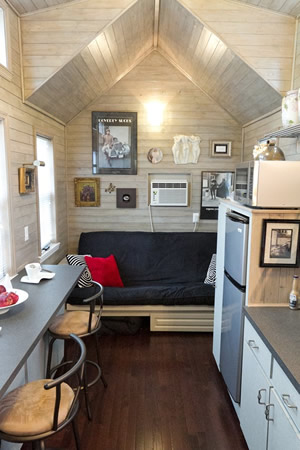
The "Hybrid" Loft: Thinking Beyond the Mattress
If you’ve decided a downstairs bed is a non-negotiable for your lifestyle, don't rule out the loft entirely. A secondary level can serve several high-utility purposes that don't require nightly acrobatics:
- Storage!!!: Who doesn’t need more storage space, especially in a tiny house? Use the loft strictly for long-term storage of seasonal gear, holiday decor, or hobby equipment.
- Guest Quarters: Keep the main floor for yourself and reserve the loft for adventurous guests or a "hangout" spot for kids.
On the Level: The Single-Story Lifestyle
Choosing a single-level design offers a seamless flow that many find more sustainable for long-term living. You bypass the "headroom deficiency" and enjoy a home that feels more like a traditional studio apartment.
The Advantages
- Accessibility: You can navigate your entire home without a second thought, which is ideal for aging in place.
- Ease of Transport: Removing the loft allows you to lower the overall height of the house. This reduces wind resistance during towing and makes it easier to clear low-hanging branches or bridges. However, the traditional tall ceiling of a tiny house is what makes them feel so large. So, I personally would limit the amount that I lowered the roof.
The Trade-Offs
The primary challenge of a single-level home is the footprint vs. mobility trade-off. To get the same amount of functional space as a lofted home, you’ll likely need to lengthen the trailer. A longer home is heavier, harder to maneuver in tight spots, and requires a more powerful towing vehicle.
Creative Middle Ground: Hidden Beds
If you are "Team Flat" but still want to optimize your floor plan, modern tiny house engineering offers some clever workarounds:
- Convertible Bed: A futon or a pull our couch can be a great option.
- The Murphy Bed: Flips up against the wall during the day.
- The "Trundle" or Slide-Under Bed: This design tucks the bed underneath a raised platform (usually a kitchen or living room). You simply pull it out at night like a giant drawer.
- Elevator Beds: High-tech motorized platforms that lower the bed from the ceiling with the push of a button.
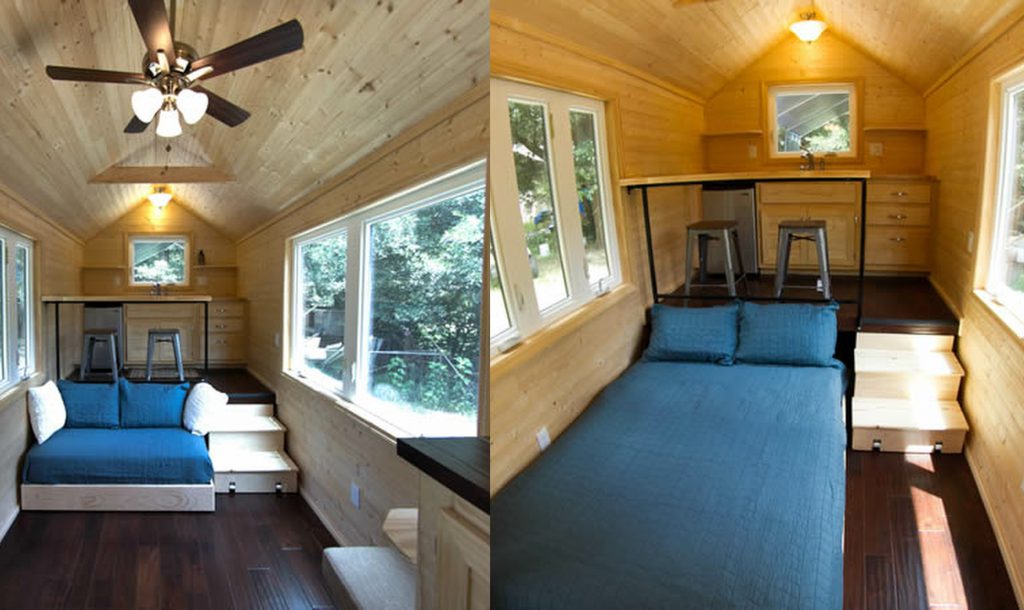
With the hidden bed option, be aware that you will need to make room for the bed every time you want to drop it down or pull it out, so the utility of the saved space is limited (i.e. you wouldn’t want to have to move a dining table every night so that you can make room for your bed).
Final Thoughts: Prioritizing Your "Want List"
The beauty of the tiny house movement lies in customization. There is no "correct" way to go tiny—only the way that fits your specific daily rhythm. Whether you prefer the cozy heights of a loft or the grounded accessibility of a single level, the ultimate goal remains the same: paring down the excess to make room for what matters.
Determine your priorities, measure your comfort level with heights, and remember that in a tiny house, the world—and your floor plan—is your oyster.
